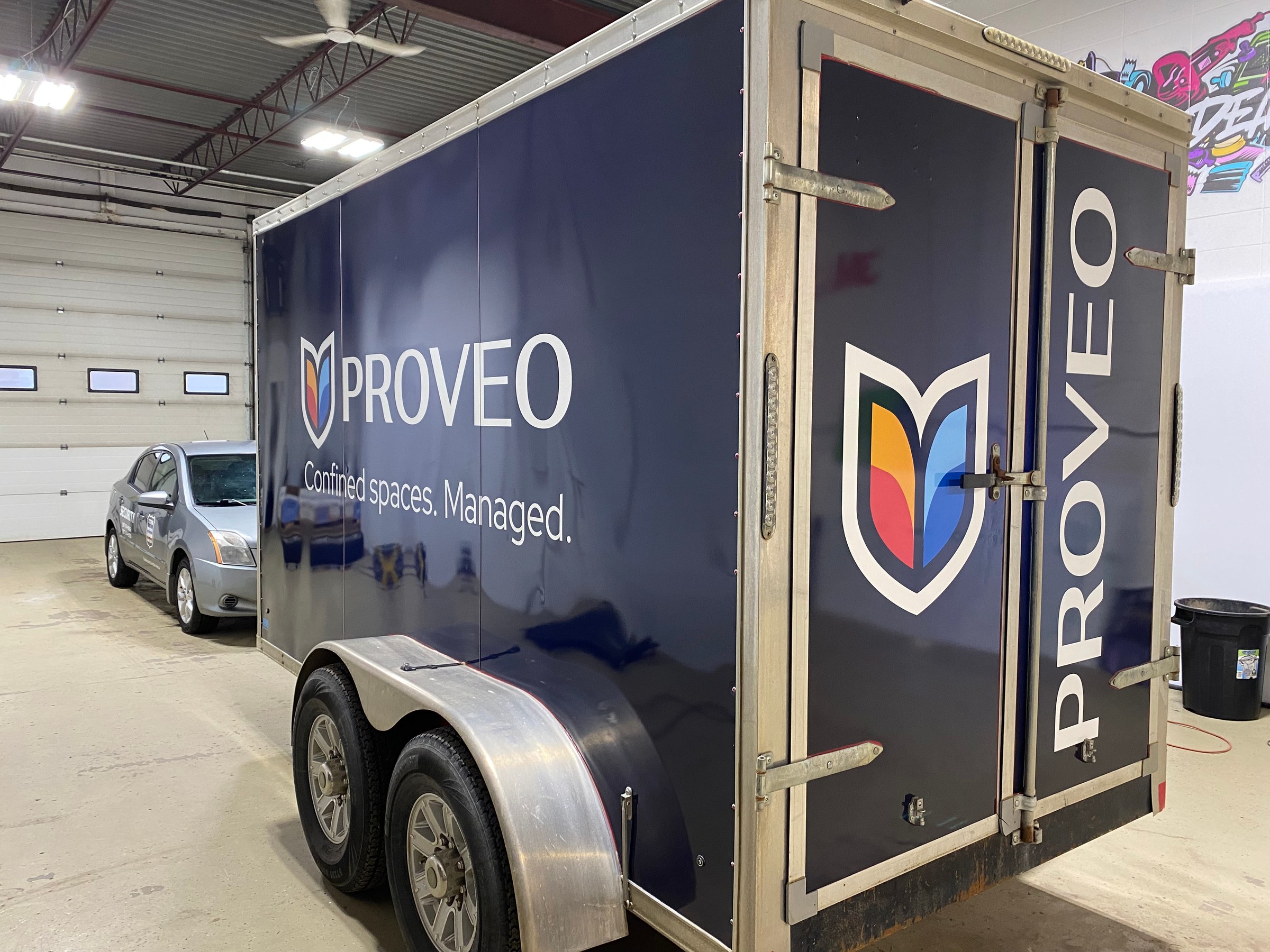
A trailer is the easiest wrap surface in a fleet: long, flat, vertical, no compound curves, no glass. The only wrinkles are the wheel wells (small flares on the outside), the access door at the front or rear (depending on trailer type), and the bottom edge where the body meets the chassis. Everything else is canvas.
What's different about wrapping a trailer
- The side is one big rectangle. Most enclosed trailers have no body lines, no curves, no glass: just one large vertical panel per side. Vinyl bridges this in one or two large sheets with minimal seam work.
- Aluminum vs steel skin. Most modern enclosed trailers are aluminum-skinned with riveted panels (similar to box trucks). Older steel trailers are flat-rolled. Both wrap fine; aluminum needs a slightly different prep (some have a clear coat from the factory that needs no further treatment, others are bare and need a degreaser pass).
- Lower body / chassis edge. The bottom 6–8 inches of the trailer body sits close to the wheels and takes road spray. We typically don't wrap this strip: it lifts within a year from constant water and salt impact. Customer brand graphics go above this line.
- Wheel-well cutouts. Modest flares around the wheel openings get wrapped in matching vinyl. The interior of the wheel well stays bare.
- Trailer doors. Rear ramp door (enclosed trailer) or barn doors get wrapped as part of the body. Flatbed trailers don't have doors but do have side toolboxes that we wrap separately.
What we wrap
- Enclosed trailers: single-axle, tandem-axle, gooseneck, 6×10 to 8.5×24+ ft
- Flatbed and deck trailers: body wrap not applicable, but side toolboxes and headboards can be wrapped
- Utility trailers: sides too low for impactful body wrap; cut-vinyl branding on the tongue area or tailgate works better
- Refrigerated trailers: same approach as enclosed; the reefer unit stays untouched
- Specialty trailers: race trailers, motorcycle trailers, equipment haulers all get the standard enclosed-trailer treatment
Pricing for a single trailer
| Work | Price |
|---|---|
| Cut-vinyl lettering, single side | $300–$800 |
| Full single-side wrap, 6×12 trailer | $2,000–$2,800 |
| Full single-side wrap, 8.5×20 trailer | $3,000–$4,500 |
| Both sides on a 6×12 | $3,500–$5,000 |
| Both sides on an 8.5×20 | $5,500–$7,500 |
| Rear door / ramp door wrap | $400–$800 |
Multi-trailer fleet pricing in line with the fleet-wraps hub.
Related work
- Fleet wraps overview: multi-vehicle pricing and process
- Box trucks: similar large-canvas math on motorized chassis
- Construction: common trailer user
- Landscaping: common trailer user
Common questions
Will the wrap survive trailer life: gravel roads, equipment loading?
Better than expected. The trailer body itself takes minor scuffs from cargo handling near the door: those areas get the most wear. We can patch a single panel for $150–$400 without redoing the wrap. The flat side panels see almost no contact damage in normal use.
Should I wrap both sides or just one?
Depends on how the trailer parks. If it's usually parked roadside (right side facing traffic), the right side gets most of the impressions and the left can be plainer or just have cut-vinyl branding. If the trailer parks in driveways or backs into job sites where either side could face the road, wrap both.
Can you wrap a brand-new trailer or do we need to break it in?
New is ideal. Brand-new trailers sometimes have factory protective film or shipping wax that needs to come off first, but otherwise the bond is best on fresh aluminum or steel. We can prep on the same day as the install.
How long does a trailer wrap take?
2–3 working days for a single-side wrap on an 8.5×20-class trailer. 3–4 days for both sides plus the rear door. Smaller utility trailers wrap in a single day.