This page is the broad landing for everything vinyl-wrap-related: what the material is, how it differs from paint, what it costs in the Edmonton market, and how to think about the choice. If you've already decided what you're wrapping, the specific pages are tighter: cars, trucks, or fleets.
What a vinyl wrap actually is
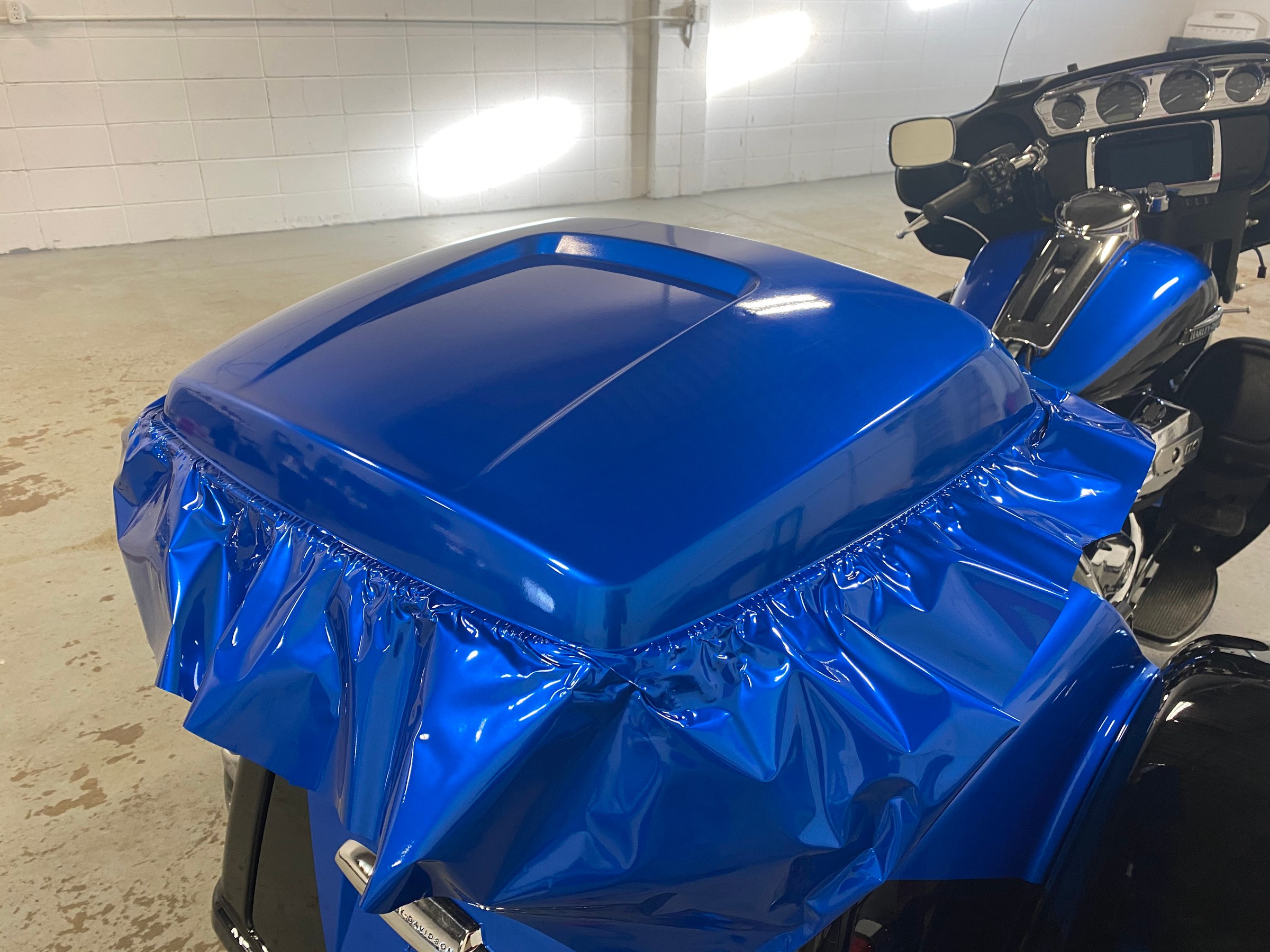
Vinyl wrap is a thin (≈3.5 mil) cast polymer film with a pressure-activated adhesive on the back. The film is engineered to stretch, conform to compound curves, and resist UV fading for years. The adhesive is reversible: it grabs hard on contact but releases cleanly when you peel it off, leaving the original paint underneath unchanged.
The category splits into two camps:
- Cast films: what we install. Thinner, more conformable, longer outdoor life (5–7 years rated, 8+ realistic for indoor-stored vehicles).
- Calendared films: cheaper, thicker, less conformable, fail at compound curves and panel edges in two to three winters. Marketed as "vehicle wrap" by some shops because the term isn't regulated. We don't use them for full-vehicle work.
The reason cast matters: a fender flare, a front bumper, or the lip of a wheel arch is a compound curve: it doesn't lay flat in any direction. Calendared film cannot wrap one without distorting the colour or splitting the adhesive line. Cast film handles them.
Finish families
The 200+ catalog options sort into six finish families. The difference is more than aesthetic; finish affects how the wrap ages, washes, and tolerates damage.
| Finish | What it looks like | Notes |
|---|---|---|
| Gloss | Mirror-smooth, deep colour, factory-paint feel | Easiest to clean. Shows swirl marks and minor scratches over time. |
| Matte | Flat, no reflection, stealth feel | Hides scratches well. Cannot be polished; abrasion is permanent. Sensitive to grease and fingerprints. |
| Satin | Soft, low sheen between matte and gloss | Best all-around for daily drivers. Forgiving on minor blemishes, easy to maintain. |
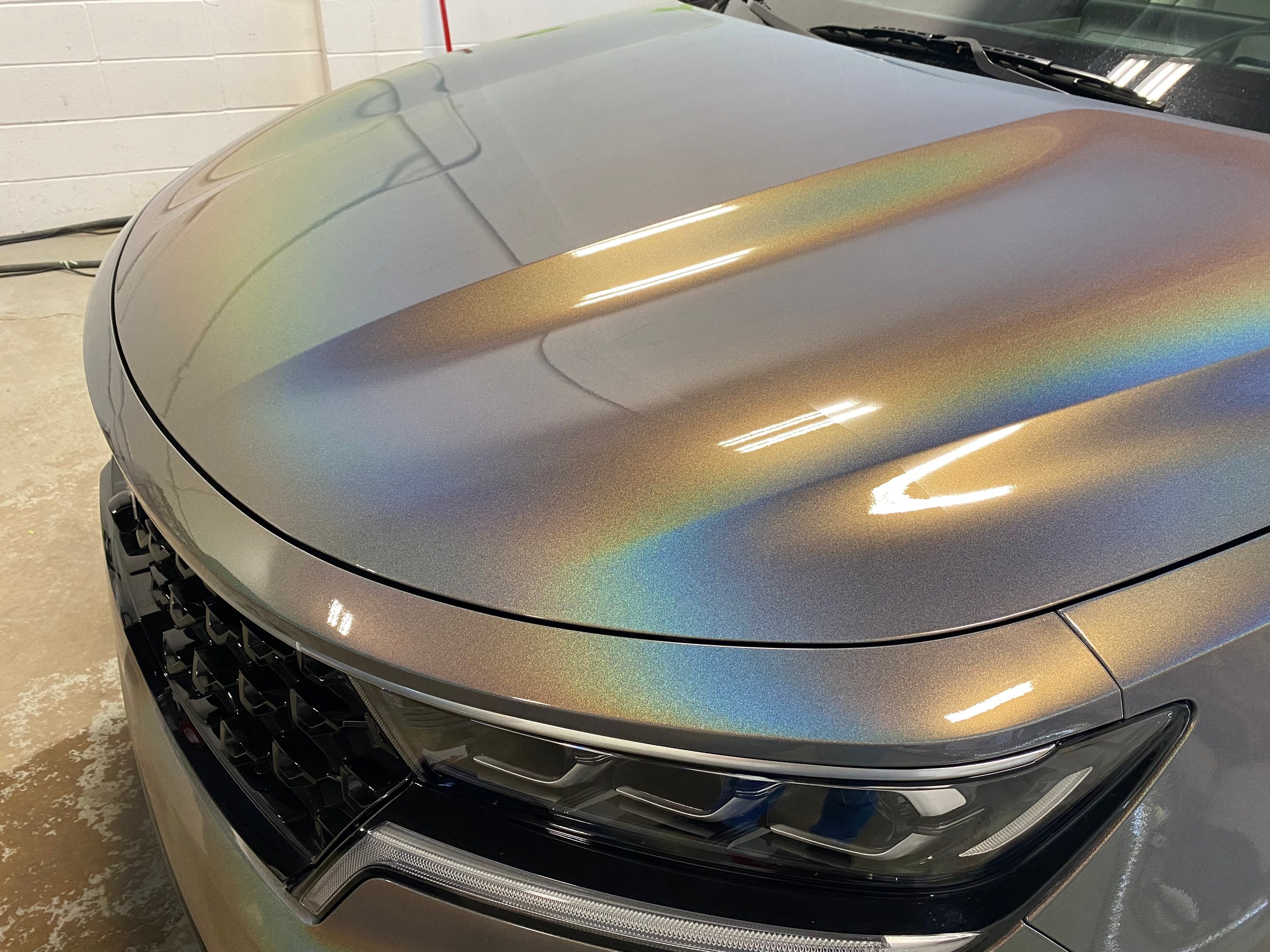
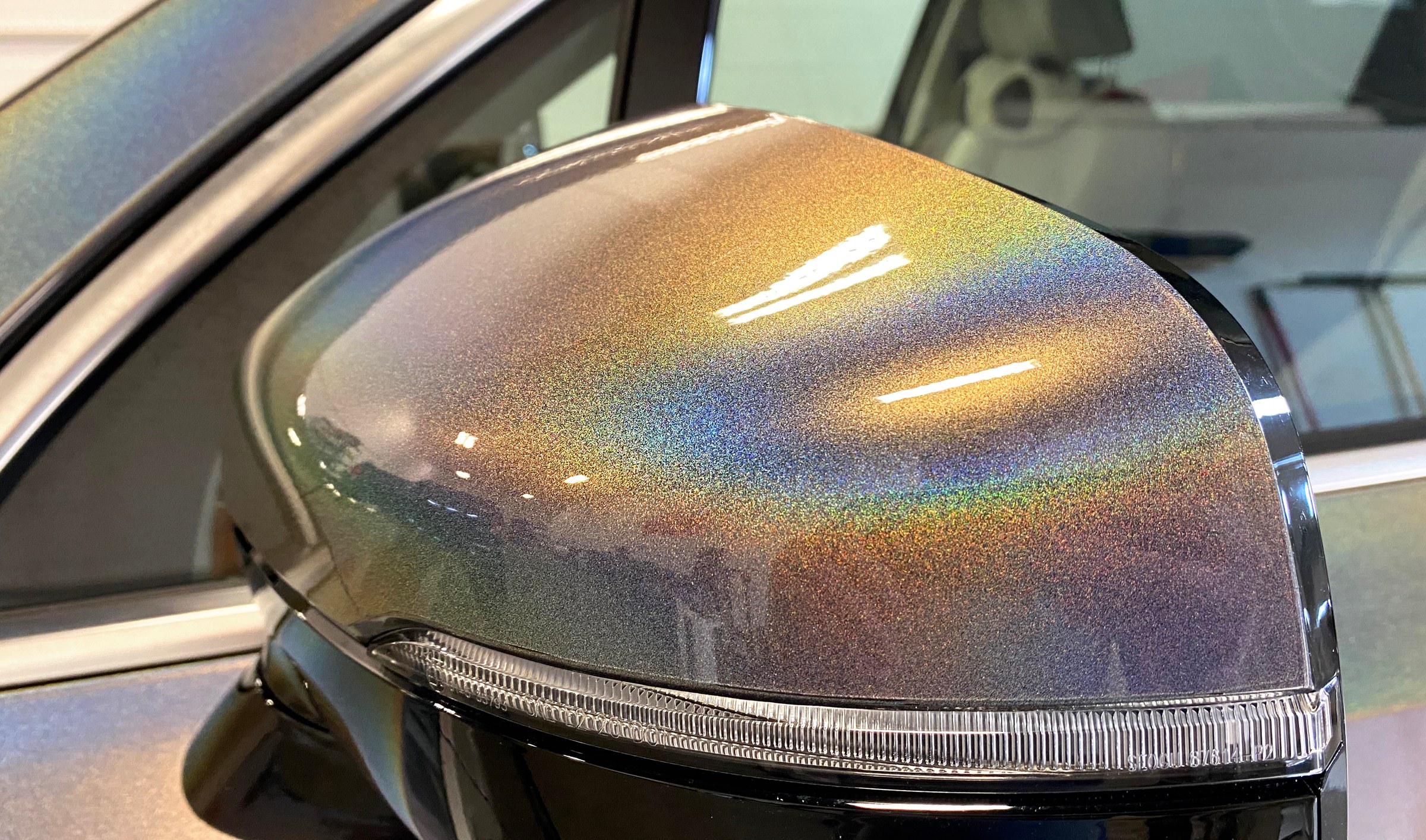
| Colour-shift | Changes hue with viewing angle (e.g., purple-to-blue, green-to-gold) | Specialty finish. Higher cost (~15% premium). Looks different in every lighting condition. |
| Carbon fibre / brushed / textured | Replicates a different material's surface | Used for accents (hood, roof, mirrors), not full vehicles. |
| Chrome and printed | Mirror chrome or custom-printed graphics | Chrome is install-intensive; printed is for branded work (logos, photos). |
Browse the actual catalog on the colours showcase; finish in person is worth seeing before committing.
What sets our materials apart
Every option we install is cast, not calendared, and every option carries a manufacturer warranty rated 5–7 years outdoors. Within that floor, the catalog spans a range of tiers:
- Catalog standard: over 100 finishes, the broadest range of everyday colours (gloss white, gloss black, silvers and greys). The default unless you want something specific from further down this list.
- Premium metallics and pearls: a stronger pearl and metallic catalog, slightly more pliable on tight contours. Frequently picked for luxury and exotic vehicles where the finish needs to read "expensive."
- Specialty finishes: colour-shift, iridescent matte, deep-metallic, and unusual colours the catalog standard doesn't carry. About a 15% material premium, worth it for what it does.
- Value tier: the same cast construction and 5–7 year durability as the rest, with a narrower colour catalog. Reach for it when budget matters and the specific colour isn't a deal-breaker.
We recommend the tier on quote day based on what you actually want; there's no shop standard we push because of margin.
Vinyl wrap vs. paint: the decision
The honest comparison, with no spin in either direction:
| Vinyl wrap | Quality respray | |
|---|---|---|
| Cost (full vehicle) | $3,500–$6,500 | $7,000–$20,000 |
| Turnaround | 4–5 working days | 3–6 weeks |
| Lifespan | 5–7 years outdoors | 15–25 years if well-cared-for |
| Reversibility | Removes cleanly within rated life | Permanent (re-paint to undo) |
| Finish options | Matte, satin, gloss, colour-shift, textured | Mostly gloss; matte clear-coats exist but lock-in |
| Damage repair | Patch a panel for $150–$400 | Full panel respray, $400–$1,200 |
| Resale impact | Preserves OEM paint underneath | Permanent; affects valuation either direction |
Wrap wins for: lease vehicles, anyone planning a change in 2–5 years, specialty finishes paint can't do, lower upfront cost. Paint wins for: forever-keeper vehicles in a single classic colour, vehicles with already-failed paint that need restoration, anyone who wants 20-year durability.
The middle case, "I want a different colour for a long time," usually breaks toward the wrap because of the cost difference, plus the option to re-wrap in 5–7 years lets you change colour twice for the price of one repaint.
What a wrap costs in Edmonton
Ballpark ranges, 2026 quotes from our shop:
| Vehicle class | Full wrap |
|---|---|
| Compact / sedan | $3,500–$4,200 |
| Sport / muscle | $4,000–$4,800 |
| SUV / luxury | $4,300–$5,500 |
| Truck (1/2-ton) | $4,000–$5,000 |
| Truck (3/4-ton+) | $4,500–$6,000 |
| Specialty / supercar | $5,500–$7,000+ |
| Partial wrap, chrome delete, accent work | $500–$2,000 |
Add 10–15% for specialty finishes and colour-shifts. Multi-vehicle fleet pricing is meaningfully different; see fleet wraps.
For the per-vehicle breakdown with vehicle-class specifics, the deeper pages have more detail: car wraps, truck wraps.
Removal, longevity, and care
A cast wrap installed correctly should give you five to seven years outdoors in Edmonton, including the freeze-thaw cycle. Indoor-stored or covered vehicles routinely go eight to ten.
Three things shorten that horizon:
- Direct overhead sun for years. Roofs and hoods fade first, especially reds, oranges, and deep matte blacks.
- Brush car washes. Eventually a brush catches an edge. Switch to touchless or hand-wash.
- Tar, sap, and acidic spotting left untreated. Vinyl is more sensitive than clear-coat to these. Get them off promptly.
Removal at end of life: cast film comes off cleanly with low heat and patient hand work. We charge $400–$900 for full-vehicle removal depending on coverage and how the film has aged. Removal more than a year past the rated life starts to cause adhesive transfer to the original paint; book a removal within the warranty window if possible.
Related pages
- Car wraps: sedans, coupes, SUVs
- Truck wraps: pickups, vans, single-vehicle work trucks
- Fleet wraps: three or more vehicles with shared branding
- Colours showcase: the full vinyl catalog
- Paint protection film: when the goal is protection, not aesthetics

Common questions
How long does a vinyl wrap last?
Five to seven years outdoors on a vehicle that's washed correctly. Indoor-stored vehicles routinely go eight to ten. The horizon depends more on care (washing, sun exposure, brush washes) than on which finish tier you chose; every cast vinyl we install performs similarly.
Will the wrap damage my paint?
Not when the paint was healthy at install and the wrap comes off within its rated life. Cast vinyl is non-destructive. Exceptions: paint already failing (peeling clear-coat, rust), fresh paint under 30 days, or vinyl left on for 10+ years. We inspect on quote day and flag any concerns before booking.
Can I wrap just part of my car?
Yes. Partial wraps, chrome deletes, and accent work (hood, roof, mirrors, accent stripes) are about half our volume. Pricing scales with coverage; most partials run $500–$2,000.
What finishes can paint not do?
Colour-shift, true matte (without clear-coat), carbon fibre texture, brushed metal, and printed graphics. Some of these exist as paint options at high cost on supercars; they're standard catalog items in vinyl.
Can I wash a wrapped vehicle in a car wash?
Touchless, yes. Brush washes, no; eventually they catch an edge and start lifting the film. Hand-wash is best, especially the first week post-install while the adhesive cures.
Will a wrap void my factory warranty?
No. Vinyl wrap is non-destructive and OEMs don't treat it as a modification under Canadian Motor Vehicle Safety Standards. The wrap itself is warrantied separately by us and the material manufacturer.
How does Edmonton weather affect a wrap?
Once cured, the wrap handles freeze-thaw fine. The install itself needs a climate-controlled environment; vinyl doesn't apply correctly below a certain shop temperature, and we don't take outdoor jobs. Our bay is climate-controlled year-round so wraps in February look the same as wraps in July.
What if I get a stone chip or scratch in the wrap?
Cast vinyl is patchable. We can cut a colour-matched piece of the original material and lay it in without redoing the whole panel. Most patches run $150–$400. Bring a photo with the quote request.
Can I see the colours in person before committing?
Yes. We keep physical sample books covering our full finish catalog in the shop. Worth visiting if you're between finishes. Specialty films (colour-shifts especially) look completely different in person than they do in a thumbnail.