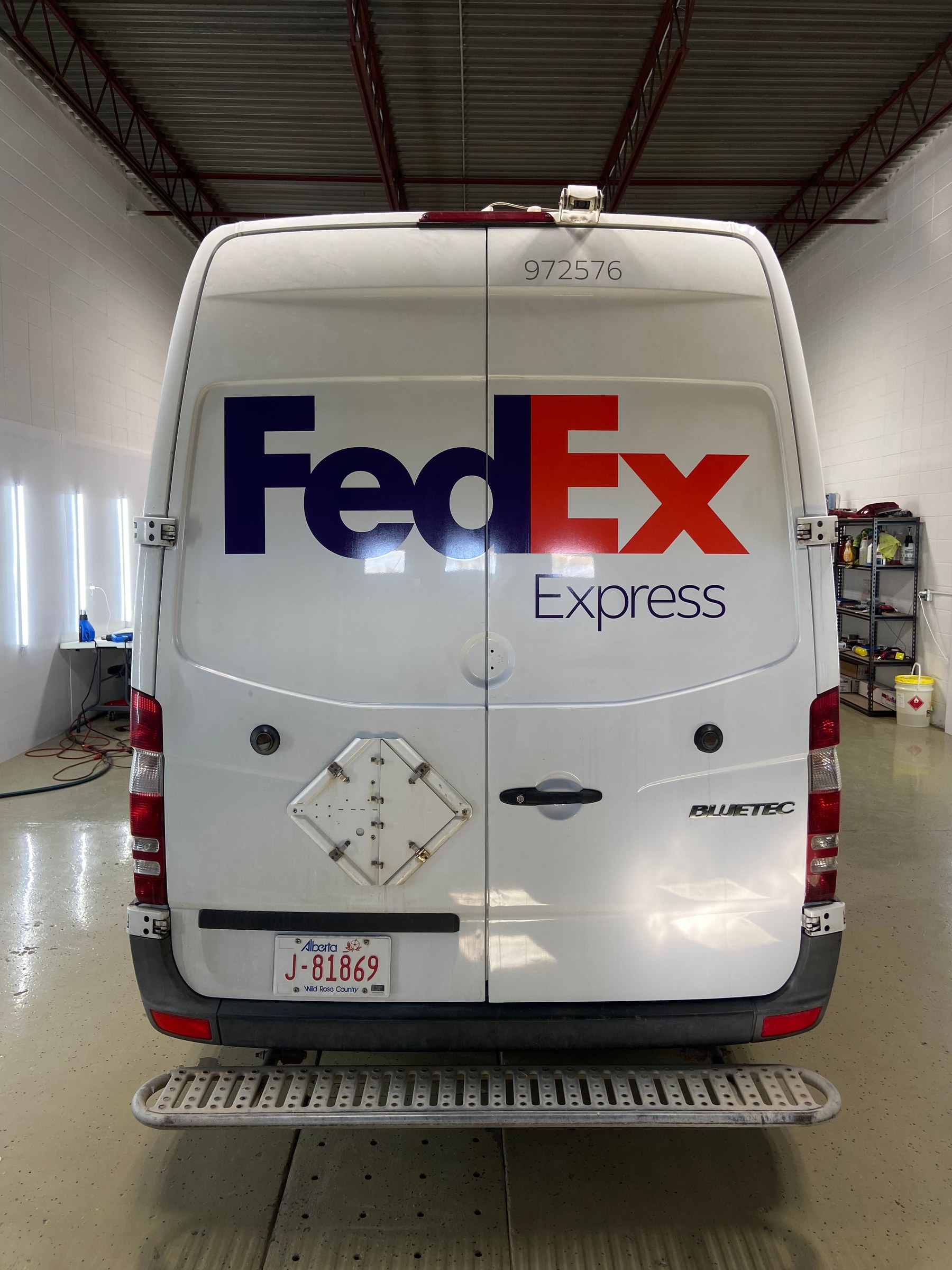
Delivery is the highest-stop-volume fleet category we wrap. Last-mile couriers, local-business delivery, white-glove furniture delivery, food delivery (the platforms and the independents): all run on the same model. The van parks, the driver gets out, the brand is visible to a fresh audience every five minutes. The wrap pays for itself in months, not years, if the design is built for the format.
What's different about wrapping a delivery fleet
- Door-area is the conversion zone. When the driver is at the back of the van loading or unloading, the rear doors face the customer's doorstep. The biggest, most legible branding goes there. The side panels are for drive-by visibility.
- High mileage means more wear on edges. A delivery van puts on 40,000–100,000 km per year. Edges (door jambs, mirror caps, body line transitions) see more wash-cycle and road-spray exposure than a low-mileage service truck. We wrap the edges fully (tucked under the jamb where possible) so lifting is minimized.
- Logos at human scale. The customer is approaching the van from 3–10 metres. The logo and brand name should read clearly at that distance, not just at highway speed. Most delivery wraps over-size the logo on the rear and door-area panels for this reason.
- Phone number is less critical than for a service trade. Customers don't call delivery vans. The wrap can use that real estate for tagline, brand identity, or trust signals (insured, bonded, "since 20XX") instead.
- Trade dress vs. platform branding. If you deliver under a third-party platform (Amazon Flex, DoorDash, Instacart), the platform usually mandates specific signage. The wrap accommodates this while keeping your own branding visible: usually side-panel for your brand, rear-door area for platform signage.
Common delivery fleet patterns
- Cargo-van full wrap, brand-focused. $3,500–$5,500 per van. The default for non-platform local-delivery fleets.
- Cargo-van partial wrap (rear + door area). $1,500–$2,500 per van. For fleets running on platforms where the side panels are spoken for.
- Step-van or walk-in full wrap. $4,500–$6,500 per vehicle. Common for white-glove and furniture-delivery fleets.
- Pickup-with-canopy partial wrap. $1,500–$2,500 per truck. Less common; for specialty deliveries that need bed access.
Pricing
| Vehicle | Typical wrap |
|---|---|
| Cargo van, partial wrap (rear + door) | $1,500–$2,500 |
| Cargo van, full wrap | $3,500–$5,500 |
| Step van / walk-in, full wrap | $4,500–$6,500 |
| Pickup with canopy, partial wrap | $1,500–$2,500 |
| Cube van (10–14 ft body) | $4,000–$5,500 |
Fleet pricing applies for 3+ vehicles: see fleet wraps. High-mileage delivery fleets sometimes opt for higher-spec material (longer warranty period); ask about the upgrade on quote day.
Related work
- Fleet wraps overview: multi-vehicle pricing and process
- Cargo vans: the dominant delivery-fleet vehicle
- Box trucks: for larger delivery operations
- Real estate: adjacent category for agent personal-vehicle branding
Common questions
How does the wrap hold up at 100,000 km per year?
Better than expected. Cast vinyl wear is mostly cosmetic at high mileage: colour fading, minor surface scratches, washing wear. The film itself stays bonded for the full 5–7 year horizon if installed correctly. Some high-mileage delivery fleets choose to upgrade to 7-year-rated film for the longer warranty.
Can the wrap handle frequent automated car-wash use?
Touchless car washes: yes, no issue. Brush car washes: not recommended for high-volume daily use; the brushes will catch an edge eventually. For a fleet that washes daily, plan on hand-wash or touchless only.
What if I'm delivering for a third-party platform with mandatory signage?
The wrap accommodates platform-mandated signage as a cut-vinyl overlay or as a designed-in element. Most platforms allow your own branding on the sides if their signage occupies the rear and one door panel. Bring the platform's brand-use guidelines.
Can the wrap include "now delivering in your area" or service-area callouts?
Yes, service-area listings work well for local-delivery fleets but date the wrap if hyper-specific. Use neighbourhood-cluster language ("Northeast Edmonton, Sherwood Park, St. Albert") rather than postal codes or street names.